Latest Posts
Tagline: Lead the Way — Because Leadership Is a Direction, Not a Title.
Intro:
Leadership begins with clarity, courage, and the willingness to go first. Lead the Way explores real-world lessons, mindset shifts, and practical insights for those ready to influence with purpose. This is a space for leaders in the making—and leaders who never stop learning
About Lead the Way
Lead the Way is a leadership and business platform dedicated to advancing principled, forward-thinking leadership in an increasingly complex global environment. Our mission is to develop leaders who combine strategic insight with ethical responsibility, enabling organizations and individuals to create sustainable value and long-term impact.
At Lead the Way, we examine leadership as a discipline—grounded in vision, accountability, and execution. The platform provides thoughtful analysis, practical frameworks, and informed perspectives on modern leadership challenges, including organizational growth, decision-making, change management, and people development. Our content is designed to support leaders across industries who seek to lead with clarity, consistency, and credibility.
Our broader vision is to contribute to a global leadership standard where influence is exercised with integrity, performance is aligned with purpose, and success is measured not only by outcomes, but by the positive impact created along the way. Lead the Way exists to shape leaders who are prepared to guide others responsibly, adapt to evolving business realities, and lead progress with confidence and foresight.

The Importance of Leadership in Business
Leadership is a critical determinant of organizational effectiveness and long-term business performance. Within academic and managerial discourse, leadership is widely recognized as the process through which individuals influence, motivate, and enable others to contribute toward the achievement of organizational objectives. Effective leadership provides strategic direction, ensures alignment between goals and actions, and facilitates coordinated effort across all levels of an organization.
From an organizational perspective, leadership significantly influences corporate culture, governance, and ethical standards. Leaders establish norms and values that shape employee behavior, decision-making processes, and accountability structures. Empirical research consistently demonstrates a positive relationship between effective leadership and employee engagement, job satisfaction, and organizational commitment, all of which contribute to improved productivity and reduced turnover.
Leadership also plays a pivotal role in managing change and complexity within dynamic business environments. As organizations confront globalization, technological advancement, and market volatility, leaders are required to exercise adaptability, strategic foresight, and sound judgment. Transformational and adaptive leadership approaches, in particular, have been shown to enhance organizational resilience and innovation during periods of uncertainty.
In conclusion, leadership is not merely a positional function but a strategic organizational capability. Its effectiveness directly affects operational performance, stakeholder trust, and sustainable competitive advantage. Businesses that invest in leadership development are therefore better positioned to navigate challenges, capitalize on opportunities, and achieve long-term organizational success.

How Leadership Can Transform an Individual
Leadership has a profound transformative effect on individuals by reshaping their mindset, behavior, and sense of responsibility. When a person assumes a leadership role, they are required to move beyond self-interest and consider the broader impact of their decisions on others and on organizational outcomes. This shift fosters a heightened sense of accountability, ethical awareness, and purpose, which contributes significantly to personal and professional growth.
The experience of leadership also enhances critical cognitive and interpersonal competencies. Leaders must engage in complex problem-solving, strategic thinking, and effective communication, often under conditions of uncertainty and pressure. Over time, these demands strengthen decision-making abilities, emotional intelligence, and adaptability. As individuals learn to manage diverse perspectives and navigate conflict, they develop greater self-awareness and empathy.
Furthermore, leadership encourages continuous learning and self-reflection. Effective leaders are frequently required to assess their strengths and limitations, seek feedback, and refine their approach to influence and motivation. This process promotes resilience, confidence, and a growth-oriented mindset. The responsibility of guiding others often accelerates maturity, reinforcing discipline, integrity, and long-term thinking.
In essence, leadership serves as a catalyst for personal transformation. It shapes individuals into more reflective, capable, and purpose-driven professionals, enabling them to exert positive influence beyond their immediate roles. Through leadership, individuals not only contribute to organizational success but also evolve into more effective and conscientious members of society.

Businesses That Require Strong Leadership
Leadership is essential across all types of businesses; however, its importance is particularly pronounced in certain sectors due to complexity, scale, risk, and human dependency. The following categories of businesses require strong, effective leadership to achieve sustainable performance and long-term success.
1. Large Corporations and Multinational Enterprises
Organizations operating at scale require leadership to manage complex structures, diverse workforces, and global operations. Strategic leadership is necessary to align vision across regions, ensure governance, and navigate regulatory, cultural, and economic differences.
2. Startups and Entrepreneurial Ventures
Startups rely heavily on leadership to provide vision, direction, and resilience during early stages of uncertainty. Founders and senior leaders must inspire teams, attract investors, and make rapid strategic decisions in highly volatile environments.
3. Family-Owned and Small-to-Medium Enterprises (SMEs)
In SMEs, leadership directly influences organizational culture and performance due to close working relationships and limited formal structures. Effective leadership is critical for succession planning, conflict management, and long-term sustainability.
4. Service-Based Businesses
Industries such as hospitality, healthcare, education, and consulting depend heavily on human interaction and service quality. Leadership plays a key role in motivating employees, maintaining standards, and ensuring consistent customer experience.
5. Manufacturing and Operations-Driven Businesses
These organizations require leadership to oversee efficiency, safety, quality control, and workforce coordination. Strong operational leadership ensures productivity while balancing cost management and employee well-being.
6. Technology and Innovation-Driven Firms
Technology-based businesses require leadership that fosters innovation, agility, and continuous learning. Leaders must manage rapid change, encourage creativity, and align technological advancement with business objectives.
7. Nonprofit and Social Enterprises
Mission-driven organizations depend on leadership to mobilize resources, maintain stakeholder trust, and achieve social impact. Leaders must balance ethical responsibility with operational effectiveness, often under resource constraints.
In summary, while leadership is vital in all business contexts, its role becomes increasingly critical in organizations characterized by complexity, change, and human dependency. Strong leadership enables these businesses to adapt, perform, and sustain competitive advantage.
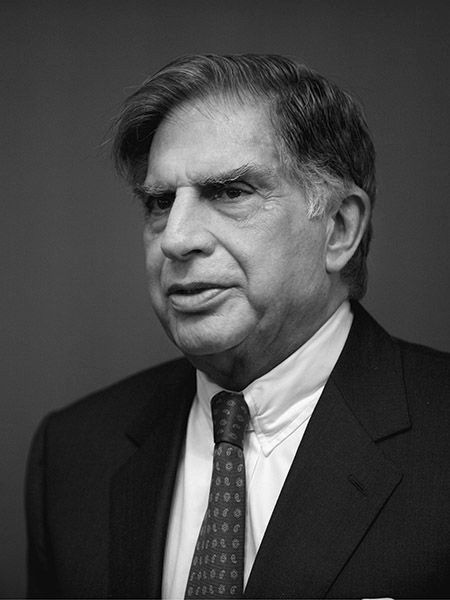
Ratan Tata as a Leader: Leadership Style and Business Transformation
Ratan Tata is widely regarded as one of the most influential business leaders in modern India, recognized not only for expanding the Tata Group’s global footprint but also for redefining leadership grounded in ethics, vision, and social responsibility. His leadership is best understood as a combination of transformational, ethical, and servant leadership styles.
As a transformational leader, Ratan Tata articulated a long-term vision that fundamentally reshaped the Tata Group. When he assumed leadership in the early 1990s, the group was largely India-centric and loosely structured. Under his guidance, Tata transformed into a globally competitive conglomerate by pursuing strategic international acquisitions such as Tetley Tea, Corus Steel, and Jaguar Land Rover. These decisions demonstrated his ability to anticipate future market opportunities, take calculated risks, and reposition the organization on the global stage.
Ratan Tata’s leadership is equally characterized by ethical and values-based leadership. He consistently emphasized integrity, transparency, and corporate governance, reinforcing the Tata Group’s longstanding commitment to trust and social responsibility. This approach strengthened stakeholder confidence, enhanced brand credibility, and differentiated Tata businesses in both domestic and international markets. His insistence on ethical conduct ensured that growth did not come at the expense of organizational values.
Additionally, Ratan Tata exemplifies servant leadership, placing societal impact alongside business success. Initiatives such as the Tata Nano project reflected his concern for inclusive innovation and affordability, aiming to improve quality of life rather than merely maximize profits. His focus on employee welfare, community development, and philanthropy reinforced a leadership model centered on service rather than authority.
The effectiveness of Ratan Tata’s leadership transformed the Tata Group from a traditional industrial conglomerate into a unified, future-oriented global enterprise. His leadership fostered strategic coherence, innovation, and resilience while preserving the group’s ethical foundation. Ultimately, Ratan Tata’s legacy illustrates how principled and visionary leadership can drive organizational transformation, sustainable growth, and enduring societal impact.

Leadership and People
At the heart of every successful business are people, and leadership determines how effectively their potential is realized. Strong leaders prioritize understanding, trust, and empowerment, creating environments where individuals feel valued and aligned with shared goals. When people are led with respect and purpose, performance naturally follows.
Leadership and Employee Motivation
Leadership directly influences employee motivation and engagement. By setting clear expectations, recognizing contributions, and providing opportunities for growth, leaders inspire individuals to perform at their best. Motivated employees are more committed, productive, and willing to contribute beyond their defined roles.
Building High-Performance Teams
High-performance teams do not form by chance—they are built through effective leadership. Leaders establish clarity in roles, encourage collaboration, and promote accountability. By fostering trust and open communication, leaders enable teams to innovate, adapt, and consistently deliver strong results.
Communication as a Leadership Tool
Communication is one of the most powerful tools available to a leader. Clear, transparent communication aligns teams with vision and strategy while reducing uncertainty. Equally important is listening—leaders who listen build trust, strengthen relationships, and make more informed decisions.
Leadership and Organizational Culture
Organizational culture reflects leadership behavior. The values leaders demonstrate, the standards they enforce, and the behaviors they reward shape how people work and interact. Strong leadership builds a culture of integrity, collaboration, and continuous improvement—providing a foundation for long-term business success.

Future of Leadership
The future of leadership is defined by adaptability, empathy, and strategic thinking. As organizations face rapid technological change and evolving workforce expectations, leaders must move beyond traditional authority-based models. Future leaders will be required to inspire trust, foster innovation, and lead with purpose in increasingly complex and uncertain environments.
Leadership Challenges in the Modern Business Environment
Modern leaders face challenges such as digital transformation, workforce diversity, remote and hybrid work models, and constant market disruption. Balancing short-term performance with long-term sustainability has become increasingly difficult. Effective leaders must navigate uncertainty, manage change, and maintain employee engagement while ensuring ethical decision-making and organizational resilience.
The Future of Leadership in a Globalized Economy
In a globalized economy, leadership demands cultural intelligence, global awareness, and inclusive decision-making. Leaders must manage cross-border teams, adapt to diverse regulatory and cultural contexts, and respond to global economic shifts. The ability to align global strategy with local execution will be a defining characteristic of successful future leaders, enabling organizations to remain competitive while operating responsibly on a global scale.
 Site Title